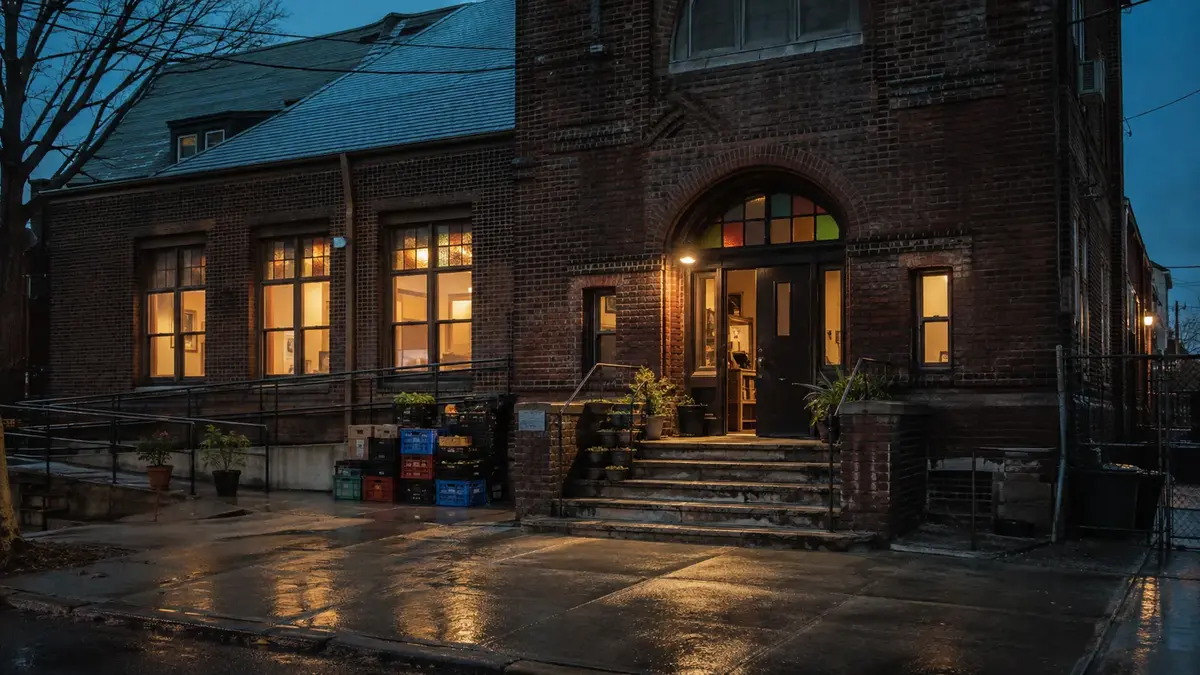
A city has many ways to turn a life into administration. Resident. Student. License holder. Witness. Case number. The Accord recognizes personhood; the systems built around it still sort people through citizenship, jurisdiction, licensure, and eligibility. The Reclaimer Congregation House keeps a different kind of record.
At Hubert Herowin’s service, that record was made by presence: people who knew him gathered in one room, said his name, stood beside his work, and held memories that no single agency could own. The House did not ask those memories to arrive in the language of evidence.
That is part of its civic function. When a death draws official attention, the Congregation House gives a community somewhere to remain a community—not merely a pool of witnesses waiting to be interviewed or a neighborhood waiting to be summarized.
The circumstances of Hubert’s death remain unresolved. The House cannot answer those questions for investigators, and grief does not turn suspicion into proof. What it can do is protect the human scale of the loss while institutions do their work.
In a city where lives are routinely compressed into files, that practice is not decorative. It is a form of public memory: local, relational, and stubborn enough to insist that a person’s meaning was never confined to the category written beside his name.
← More from The Numenal